Smart thermostats designed for heat pumps are climate control devices that manage both heating and cooling cycles by communicating directly with a system’s reversing valve. Many smart thermostats work directly with heat pumps, but compatibility depends on the system type, heating stages, and whether a C wire or power accessory is available. Upgrading an older thermostat requires mapping existing terminal labels like O/B, AUX, and Y to the new backplate. Advanced smart units handle single-fuel heat pumps with auxiliary heat strips, while specific configurations can control dual-fuel systems that pair a heat pump with a gas furnace.
Our Winner: ecobee Smart Thermostat Essential
This unit takes the top spot because it natively supports 2H/1C heat pumps and includes a Power Extender Kit for homes lacking a dedicated C wire.
How We Compared These Models
Based on manufacturer specifications and verified buyer feedback, this comparison prioritizes staging support, power requirements, and reversing valve management. High-ranking thermostats provide clear O/B terminal mapping for heat pumps and include built-in safeguards to prevent running auxiliary heating improperly. Models are evaluated on their ability to handle multi-stage setups and their included solutions for missing common wires.
| Product | Key Specs | Our Choice | Action |
|---|---|---|---|
| ecobee Smart Thermostat Essential | 2H/1C Heat Pump Support, PEK Included | Best Overall | Check Price |
| Sensi Smart Thermostat ST55 | Standard Footprint, Wi-Fi Enabled | Best Value | Check Price |
| Sensi Lite Smart Thermostat ST25 | Slim Profile, Usage Reports | Best Budget Name Brand | Check Price |
| Smart Thermostat (B075BF6V58) | Basic Heat Pump Controller | Best Basic Monitor | Check Price |
| Smart Thermostat (B0DSGCDMPT) | Standard 24V Support | Best Alternate Basic | Check Price |
In-Depth Reviews

1. ecobee Smart Thermostat Essential – Best Overall
Our Verdict: Based on the specifications, this model is highly capable for heat pump users because it officially supports 2H/1C heat pump configurations and bypasses the strict C wire requirement with a provided kit.
The ecobee Essential stands out for heat pump compatibility by specifically managing up to two stages of heating and one stage of cooling. This covers the typical single-stage compressor paired with electric auxiliary heat strips. According to manufacturer guidelines, users without a common wire can utilize the included Power Extender Kit directly at the control board. It supports smart sensors to monitor specific rooms and balances temperature readings to prevent the heat pump from overworking.
Why We Like It
- Directly supports 2H/1C heat pump setups.
- Includes a Power Extender Kit for C wire substitution.
- Integrates with Apple HomeKit, Google Assistant, and Alexa.
Pros & Cons
Pros
- Excellent staging control for auxiliary heat
- Energy Star certified
Cons
- Room sensors are sold separately

2. Sensi Smart Thermostat ST55 – Best Value
Our Verdict: This unit offers a traditional footprint that covers the unpainted wall space of older models while bringing modern Wi-Fi control to standard heat pump systems.
Verified buyers report high success rates installing this model on standard HVAC systems. While the manufacturer notes that a C wire is not required for many setups, heat pump configurations strictly require a common wire to power the Wi-Fi radio continuously. It includes usage reports and maintenance reminders for air filters. The physical buttons provide tactile feedback, which is helpful for users who prefer physical controls over touchscreens. Sensi explicitly states they do not sell user data to third parties.
Why We Like It
- Traditional form factor covers old wall marks.
- Physical buttons provide easy manual adjustments.
- Delivers detailed HVAC usage reports.
Pros & Cons
Pros
- Straightforward installation process
- Strong privacy protection policy
Cons
- C wire strictly required for heat pumps
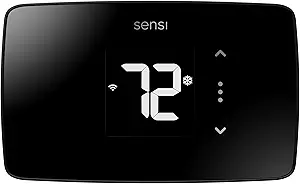
3. Sensi Lite Smart Thermostat ST25 – Best Budget Name Brand
Our Verdict: The Sensi Lite is a highly accessible entry point for heat pump owners who want smart app control without paying for complex multi-zone sensor features.
Similar to its larger sibling, the Sensi Lite demands a common wire for heat pump applications. It integrates a built-in level on the backplate to ensure a clean installation. The companion app enables geofencing, automatically adjusting the temperature based on your smartphone’s location to reduce compressor runtime. It is Energy Star certified, indicating strong energy-saving potential through basic scheduling functions.
Why We Like It
- Sleek, minimalist design blends into the wall.
- Features geofencing for automated energy savings.
- Includes a built-in level for clean mounting.
Pros & Cons
Pros
- Excellent app interface
- Energy Star rated
Cons
- Fewer staging capabilities than premium models

4. Generic Smart Thermostat (B075BF6V58) – Best Basic Monitor
Our Verdict: This unbranded thermostat serves as a functional replacement for users needing simple heat pump control without premium software ecosystems.
Based on standard 24V relay specifications, this thermostat manages basic compressor and reversing valve operations. Without advanced algorithms to manage auxiliary heat staging, it functions primarily as a strict temperature-based trigger. Buyers frequently mention it works adequately for single-stage setups but lacks the polished scheduling interfaces found on name-brand competitors.
Why We Like It
- Handles primary heating and cooling signals.
- Simple interface with direct temperature inputs.
Pros & Cons
Pros
- Highly affordable
- Straightforward operation
Cons
- No advanced smart home integrations

5. Generic Smart Thermostat (B0DSGCDMPT) – Best Alternate Basic
Our Verdict: Another budget-friendly option that covers standard 24V wiring, offering an accessible display for straightforward heat pump management.
This unit provides standard thermostatic control for heat pump systems. It relies on a physical setpoint to dictate compressor activity. Like similar budget monitors, it requires a C wire to ensure stable screen power and consistent relay switching. The interface focuses strictly on basic temperature changes rather than energy usage reports or algorithmic savings.
Why We Like It
- Clear display for quick reading.
- Standard terminal block for generic wiring.
Pros & Cons
Pros
- Budget-conscious pricing
- Easy manual setpoint adjustment
Cons
- Lacks detailed installation guides
Heat Pump Wiring and Compatibility Checklist
Before purchasing a smart thermostat, verifying your current system capabilities prevents costly compressor lockouts. Use this checklist to map your current terminal wires to standard smart thermostat requirements.
- R / Rc / Rh: The 24-volt power source from your transformer.
- C (Common): Provides continuous power. For a single-stage heat pump, most manufacturers require a C wire or a dedicated power connector.
- Y / Y1: Controls the compressor for primary heating and cooling.
- G: Activates the indoor blower fan.
- O / B: Energizes the reversing valve. Google’s troubleshooting guide notes that Nest thermostats default to O unless the system specifically requires B.
- AUX / W2: Triggers auxiliary heat strips.
- E: Activates emergency heat, bypassing the compressor entirely in freezing conditions.
Worked Example: Single-Stage vs. Dual-Fuel
In a single-stage heat pump with auxiliary electric strips, the thermostat controls the compressor via the Y wire and supplemental heat via the AUX wire. Google specifies that heat pumps with AUX heat strips use Heat Pump Balance to optimize efficiency. Conversely, a dual-fuel setup pairs a heat pump with a gas furnace. In this dual-fuel configuration, the thermostat uses a specific Breakpoint temperature to shut down the heat pump entirely and activate the gas furnace, ensuring both systems never run simultaneously to prevent ductwork damage.
Pre-Purchase Buying Checklist
- Remove your current thermostat faceplate.
- Photograph the existing wiring terminal block.
- Verify the presence of a C wire or check if your selected model includes a power extender.
- Count your heating stages. A Nest Learning Thermostat 4th Gen controls up to 5 heating stages, while base models typically max out at 2 or 3.
Frequently Asked Questions
What smart thermostat works with a heat pump?
Most modern smart thermostats work with standard heat pumps. Brands like ecobee, Sensi, and Google Nest support conventional 24V heat pump systems. You must confirm whether your setup uses a single-stage or multi-stage compressor and if it includes auxiliary electric heating or a dual-fuel gas furnace.
Can Nest thermostat work with a heat pump and auxiliary heat?
Google’s Nest thermostats support heat pumps with auxiliary heat. The Nest Learning Thermostat 4th gen works with up to 5 heating stages, while the base Nest Thermostat supports heat pumps with one stage of heating and cooling plus auxiliary or emergency heat. According to Nest thermostat technical specifications, configuring the O/B terminal correctly is required for proper operation.
Is Nest thermostat compatible with a heat pump and gas furnace?
A system utilizing a heat pump and a gas furnace is known as a dual-fuel system. The Nest Learning Thermostat and Nest Thermostat E handle dual-fuel configurations by setting a Dual Fuel Breakpoint. They read local weather data over Wi-Fi to lock out the heat pump and activate the gas furnace below a specific outdoor temperature.
Do smart thermostats work with heat pumps that need a C wire?
For a single-stage heat pump, manufacturers state that a C wire or an official power accessory is typically required. Models like the ecobee Essential include a Power Extender Kit to bypass this issue, while Google requires a C wire or the separate Nest Power Connector for stable operation.
How do I tell if my heat pump is single-fuel or dual-fuel?
A single-fuel heat pump uses electricity for both the compressor and backup auxiliary heat strips in the air handler. A dual-fuel system uses an electric heat pump outdoors paired with an indoor gas or oil furnace for backup heat. Checking your indoor unit for a gas line and flue pipe quickly identifies a dual-fuel configuration.
Conclusion
Selecting the correct smart thermostat for your heat pump depends entirely on matching your system’s staging limits and wiring constraints. The ecobee Smart Thermostat Essential stands out as a highly capable solution due to its included Power Extender Kit and direct support for 2H/1C configurations. Whether managing simple electric auxiliary heat or a complex dual-fuel gas furnace setup, verifying your C wire presence and O/B terminal mapping guarantees a safe, efficient installation.
Affiliate Disclosure: As an Amazon Associate, we may earn commissions from qualifying purchases from Amazon.com. This comes at no extra cost to you and helps support our research.