A steam mop cleans and sanitizes sealed hard floors highly effectively when dealing with stuck-on grime and grease, but it is not universally better than a regular mop. Regular mops remain cheaper, offer more versatility, and easily absorb large liquid spills, whereas steam mops can damage delicate floors and often just push wet messes around. Choosing the right tool comes down to your exact flooring type and what kinds of spills happen most often in your home.
- Steam mops excel at loosening grease and sanitizing sealed tile or stone floors without chemical solutions.
- Regular mops are the only safe choice for large wet spills and unsealed or delicate flooring.
- Using a steam mop on wood, laminate, or vinyl can cause permanent damage due to heat and moisture.
- Steam mops require an electrical outlet and a higher upfront cost, while regular mops are highly portable but require ongoing purchases of cleaning solutions.
What Each Mop Does and How It Works
A regular mop relies on physical scrubbing power and chemical cleaning solutions. You dip an absorbent head,typically made of cotton, sponge, or microfiber,into a bucket of water mixed with soap or detergent. The mop absorbs liquids on the floor, while the physical wiping motion picks up dirt. You then wring the dirty water back into the bucket.
A steam mop operates entirely differently. It uses a built-in electrical heating element to boil water inside a small tank. The unit pushes vapor out through a cleaning pad on the bottom. According to manufacturer specifications, the steam output can reach temperatures around 250°F. This intense heat melts grease and loosens stuck-on grime so the attached microfiber pad can wipe it away. They do not require a bucket or chemical floor cleaners, relying solely on heated water.
Does a Steam Mop Clean Better Than a Regular Mop?
For everyday cleaning and simple dust removal, both tools work well. However, they handle different types of messes with varying success.
When it comes to sticky spills, kitchen grease, and bathroom grime, steam mops have a slight edge. The high heat melts dried syrup, cooking oil splatter, and soap scum quickly. You do not need to scrub as hard. Yet, the overall difference in basic dirt removal is small. According to testing by consumer advocacy group CHOICE, steam mops removed stains slightly better than a regular mop, but the difference was marginal.
Where steam mops fail completely is with wet spills. A regular mop acts like a giant sponge. If you drop a glass of juice, a regular mop soaks it up. A steam mop cannot absorb large volumes of liquid. Testing from Wirecutter notes that steam mops do not clean wet messes well and often just push the mess around rather than absorbing it.
From the Shop
Buyers frequently mention frustration when trying to use a steam mop as their only floor cleaning tool. If a child drops a bowl of cereal and milk, hitting that mess with 250°F steam creates a hot, sticky paste that smears across the kitchen. You will always need paper towels or a regular mop to handle standing liquid before you steam.

Is a Steam Mop Better for Sanitizing Floors?
Many top pages blur the line between cleaning (removing dirt) and sanitizing (killing germs). A steam mop is an excellent sanitizer, but it is not the only way to kill bacteria.
Because steam mops reach temperatures near 250°F, they kill germs effectively without harsh chemicals. However, you must hold the mop over the exact spot for several seconds to achieve true sanitization. A quick pass will not kill everything.
Do regular mops sanitize as well? Yes, if you use the right cleaning solutions. A study cited by Ideal Home showed that steaming reduced 77% of floor bacteria, while mopping with white vinegar and water cut 71%, and regular detergent cut 70%. Furthermore, CHOICE explicitly states a steam mop kills no more bacteria than a regular mop paired with soap, warm water, and a simple sponge wipe.
Which Floors Are Safe for a Steam Mop?
Floor compatibility is the single biggest limitation of steam mops. Heat and moisture destroy certain materials.
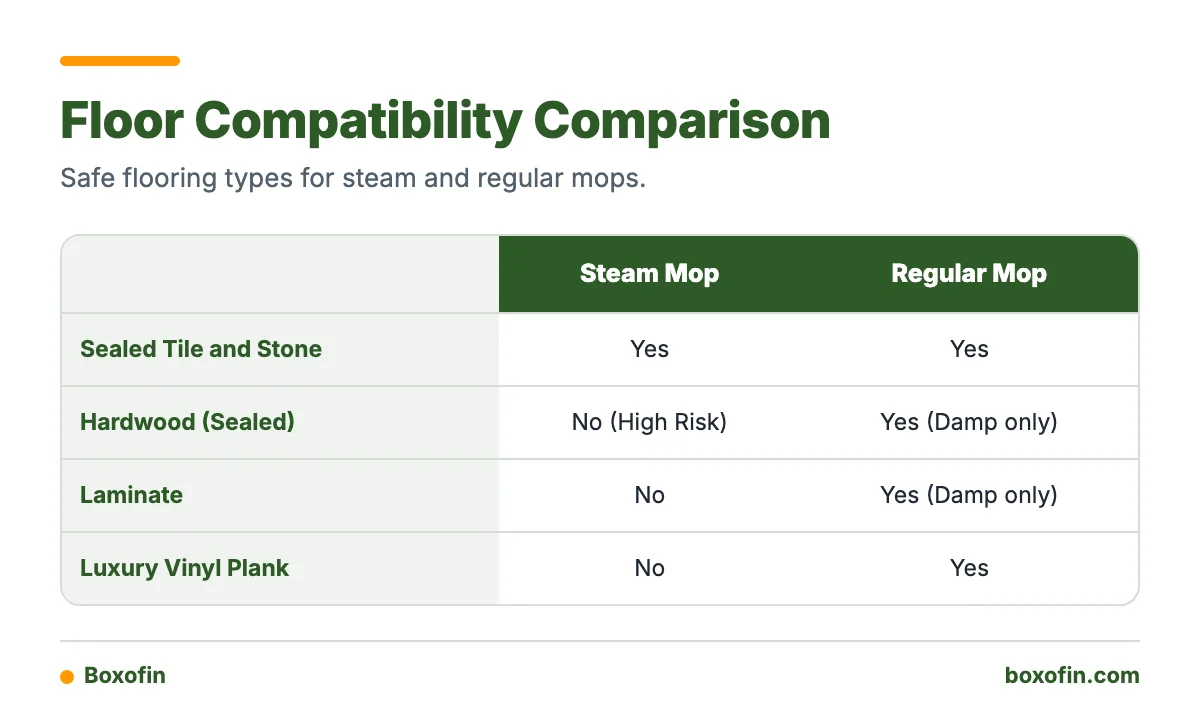
Can a steam mop be used on wood, laminate, vinyl, or tile? According to experts at Wirecutter, steam mops are safe only for use on sealed tile and stone. They can easily damage other types of flooring.
| Flooring Material | Steam Mop Safe? | Regular Mop Safe? | Why? |
|---|---|---|---|
| Sealed Tile & Stone | Yes | Yes | Highly resistant to heat and moisture. |
| Hardwood (Sealed) | No (High Risk) | Yes (Damp only) | Heat degrades the finish; steam forces moisture into wood grains. |
| Laminate | No | Yes (Damp only) | Moisture causes the composite core to swell and warp permanently. |
| Luxury Vinyl Plank (LVP) | No | Yes | High heat melts the adhesives holding the vinyl layers together. |
As of October 2026, many flooring manufacturers will void your warranty if you use a steam mop on their laminate or vinyl products. Always check your specific floor’s care guide.
Cost and Ownership Trade-offs
How much more expensive is a steam mop than a regular mop? A quality bucket mop system costs between $30 and $60. A reliable steam mop ranges from $80 to $150.
Beyond the initial price tag, consider the ongoing costs. Regular mops require you to buy chemical cleaning solutions regularly. They also wear out faster and need replacement heads. Steam mops require electricity to run and use reusable, washable microfiber pads. They do not need chemical solutions, which saves money over time.
However, steam mops have mechanical parts that can fail. Heating elements burn out, and water pumps get clogged.

How to Choose: Decision Matrix
If you are still unsure which mop fits your home, use this simple logic.
- If your home has mostly unsealed wood, laminate, or vinyl flooring: Buy a regular mop. A steam mop will eventually damage these floors.
- If you frequently clean up large, wet liquid spills (like dropped drinks): Buy a regular mop. Steam mops cannot absorb standing water.
- If your home has mostly sealed tile or stone floors: Buy a steam mop. It makes fast work of the grout lines and surface grime.
- If you want to sanitize without chemical odors: Buy a steam mop. The heat handles germs using only water.
Frequently Asked Questions
Is steam mop better than regular mop?
A steam mop is better for removing sticky messes, sanitizing without chemicals, and deep cleaning sealed tile or stone. However, a regular mop is better for picking up large liquid spills, cleaning unsealed or delicate floors like laminate, and maneuvering without a power cord.
Does steam mop clean better than regular mop?
For standard dirt and dust, they perform similarly. A steam mop cleans stubborn, dried-on grease better because the 250°F heat melts the grime. However, a steam mop cleans wet messes much worse than a regular mop, as it tends to push liquids around rather than absorbing them.
Is a steam mop better for sanitizing floors?
It is highly effective at sanitizing because it uses extreme heat to kill bacteria. However, studies show that a regular mop paired with hot water and a quality detergent or white vinegar removes a nearly identical percentage of household bacteria. Steam is better if you specifically want to avoid chemical cleaners.
Do steam mops need chemicals or cleaning solution?
No. Steam mops are designed to be used with water only. In fact, adding chemical floor cleaners to a steam mop’s water tank can damage the internal heating element and void the manufacturer’s warranty. If you use a steam mop, heat and plain water do all the heavy lifting.
Can a steam mop be used on wood, laminate, vinyl, or tile?
Steam mops are generally only safe for sealed tile and stone. The intense heat and moisture can warp laminate, dull the finish on hardwood, and melt the adhesives in vinyl flooring. Always default to a slightly damp regular mop for wood, vinyl, and laminate floors.