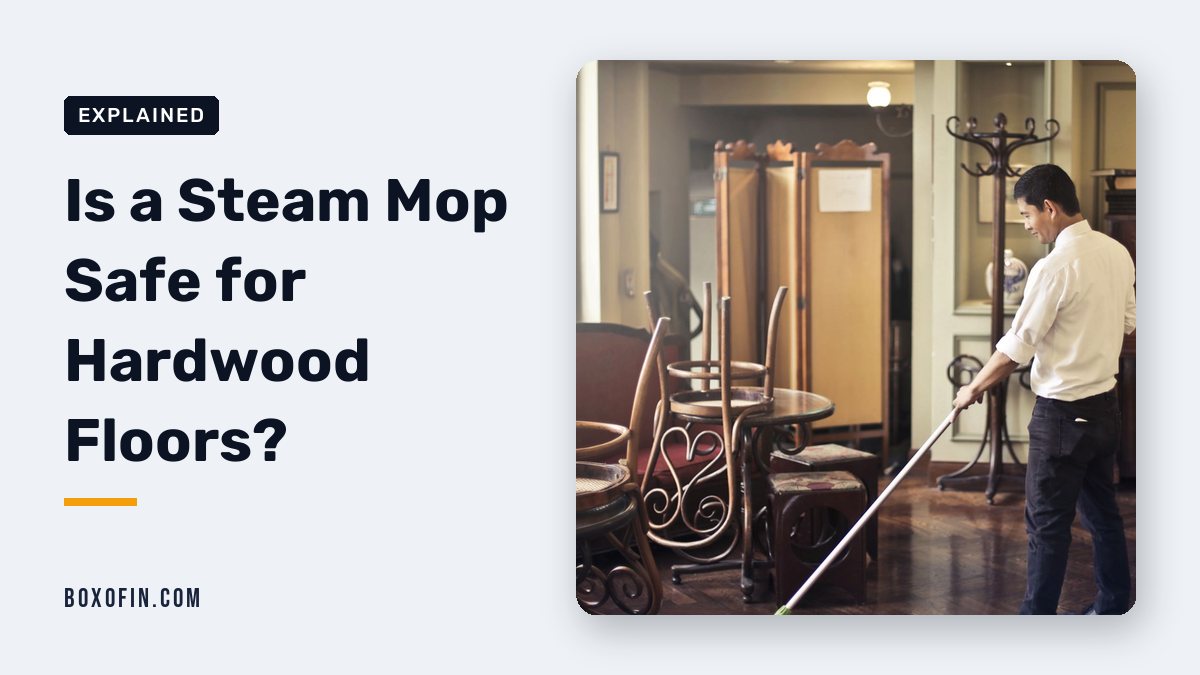
If you own or rent a home with wood floors and wonder about a steam mop, the short answer is usually not. Heat and moisture together can warp, swell, or dull hardwood. Some makers say their mops suit sealed hardwood, but check with your floor maker first.
- Steam combines heat and water. Wood reacts badly to both at once.
- Unfinished and waxed hardwood should never be steam cleaned.
- Engineered hardwood needs written approval from the floor maker.
- Shark says its mops suit sealed hardwood only, but Consumer Reports still advises against steam on wood.
- A damp microfiber mop is the safer daily choice.
Is a Steam Mop Safe for Hardwood Floors?
Usually not. Consumer Reports says steam mops should not be used on wood floors because moisture and heat can warp the wood, including solid and engineered types. You can read its reasoning in Why You Shouldn’t Use a Steam Mop on Wood Floors.
Is a steam mop bad for wood floors?
It can be. Wood is a natural material that takes in and gives off moisture. Steam pushes hot vapor into seams and tiny gaps in the finish. The boards absorb it, swell, and later dry unevenly. That is how cupping (edges rise) and crowning (centers rise) start.
Will a steam mop ruin hardwood floors?
One pass will not always ruin a floor. Damage tends to build up. Repeated use can cloud the finish, open gaps between boards, and lift edges. Heat alone can also dull the sheen. Once boards warp, the fix is often sanding or replacement, not cleaning.

Steam Safety by Floor Type
Not all wood floors are the same. The finish and the build matter more than the species.
| Floor type | Steam mop verdict | Why |
|---|---|---|
| Unfinished hardwood | Never | No barrier. Wood soaks up steam directly. |
| Waxed hardwood | Never | Heat softens and removes wax. |
| Solid hardwood, polyurethane sealed | Usually avoid | Finish can wear at seams. Boards can still swell. |
| Engineered hardwood | Manufacturer-approved only | Thin top layer and glued layers can separate. |
| Sealed wood, floor maker approves steam | Possible with caution | Written approval and a spot test come first. |
COIT says unfinished and wax-finished hardwood should never be steam cleaned. It adds that engineered hardwood should be steamed only if the manufacturer specifically approves. See why COIT advises avoiding steam mops on hardwood.
Is a steam mop safe for engineered hardwood floors?
Only if the floor maker says so. Engineered planks have layers bonded together. Steam can weaken that bond over time. Check the care sheet or warranty first.
What Shark and Other Makers Say
Is a Shark steam mop safe for hardwood floors?
Shark says its steam mops are suitable for sealed hard floors, including sealed hardwood, and not for unsealed wood. It also warns that unsealed and waxed floors can be damaged, and that heat or steam may remove sheen. Its SE400 FAQ tells owners to test an isolated area and follow the floor maker’s care instructions.
Is a steam mop okay for sealed hardwood floors?
Maybe. Consumer Reports notes that Shark and Bissell both say their mops work on sealed hardwood, yet it still recommends against it. The reason for the gap is simple. Mop makers test their product. Floor makers must stand behind a floor for decades. Their warranties often exclude steam damage, so a mop claim does not protect you.
What steam mop is safe for hardwood floors?
No model is universally safe. Look for one with adjustable steam settings and a clean, flat microfiber pad. Keep the setting low and keep the mop moving. Still, the floor matters more than the mop.
How to Tell if Your Floor Is Sealed
Sealed means a surface finish, such as polyurethane, covers the wood. Try this in a hidden spot, like inside a closet.
- Place a few drops of water on the floor.
- Wait a few minutes.
- If the water beads up, a finish is present. If it soaks in or darkens the wood, the floor is unsealed.
A bead does not prove the floor can handle steam. It only rules out the worst case.
Check the warranty and care sheet
Look for the words “steam,” “moisture,” or “approved cleaners.” Many floor makers ban steam cleaning in writing. If you cannot find the sheet, search the floor brand’s website or call them. Keep a copy of the answer.
Signs You Should Never Steam Your Floor
- The finish looks worn, patchy, or dull.
- You see gaps between boards or cracks in the finish.
- The floor is waxed or unfinished.
- Boards already cup, lift, or feel uneven.
- The warranty bans steam, or you cannot find the care sheet.
Safer Ways to Clean Hardwood
The safest method is also the simplest. Sweep or vacuum with a hard-floor setting, then use a barely damp microfiber mop. Dry any wet spots right away.
| Floor type | Best alternative |
|---|---|
| Sealed solid hardwood | Dry dust mop, then damp microfiber with a pH-neutral wood cleaner |
| Engineered hardwood | Vacuum, then a lightly misted microfiber pad |
| Waxed hardwood | Dry dust mop and a wax-safe cleaner only |
| Unfinished hardwood | Dry sweeping or vacuuming, with minimal moisture |

Decision Checklist and Worked Example
- Waxed or unfinished? Stop. Do not steam.
- Engineered? Steam only with written approval from the floor maker.
- Warranty bans steam or says nothing? Do not steam.
- Sealed, solid, and the warranty allows it? Spot test in a hidden area before any wider use.
- Spot looks dull, cloudy, or lifted? Stop and switch to damp mopping.
Worked example (hypothetical): Say you own a Shark steam mop and a solid oak floor with a polyurethane finish. The water drop beads, so the floor is sealed. Shark’s guidance allows sealed hardwood, so the mop passes. But the floor’s care sheet says “no steam cleaners.” That ends it. Use a damp microfiber mop instead. Had the sheet allowed steam, you would test one hidden patch on low steam, then check it once it dries.
Frequently Asked Questions
Is steam mop safe for hardwood floors?
Generally no. Heat and moisture can warp, swell, or discolor wood. Only consider steam on sealed floors when the floor maker approves it.
Is steam mop bad for wood floors?
It can be. Steam gets into seams and thin spots in the finish, and repeated use can cause cupping and dull the sheen.
Will steam mop ruin hardwood floors?
Not always on the first use, but damage builds up. Warped boards often need sanding or replacement.
What steam mop is safe for hardwood floors?
No steam mop is safe for every wood floor. Pick one with adjustable steam, use low heat, and only use it if your floor maker allows steam.
Is Shark steam mop safe for hardwood floors?
Shark says its mops suit sealed hardwood and not unsealed or waxed wood. Consumer Reports still advises against steam on wood, so check your floor warranty first.
Is steam mop safe for engineered hardwood floors?
Only if the manufacturer specifically approves it. Otherwise the layers may separate.
Is a steam mop okay for hardwood floors?
For most homes, a damp microfiber mop is the better choice. Use steam only on sealed floors with written approval and a successful spot test.