Essentials and extras are two different shopping lists. Every new home needs a refrigerator, a cooking appliance, and laundry machines on day one, while a dishwasher, microwave, and small appliances can wait. Also check your contract, because what stays with the house varies by sale, and sellers should know that new appliances usually boost buyer appeal more than appraised value.
- Buy first: refrigerator, range or cooktop with oven, washer, and dryer.
- Dishwashers and microwaves are convenient upgrades, not strict necessities.
- Appliance inclusion is not automatic. Confirm it in writing in the purchase contract.
- Measure the space, the doorways, and the hookups before you order anything.
- New appliances help a home sell, but they rarely add a large amount to the appraisal.
Appliances You Need on Day One
Four appliances cover the basics of daily life: a refrigerator, a range (or cooktop and wall oven), a washer, and a dryer. Without them, you cannot store food, cook, or clean clothes. Everything else is a comfort choice.
Kitchen checklist
- Refrigerator: Needed immediately. Food spoils fast without one.
- Range or cooktop and oven: Check whether your home uses gas or electric hookups.
- Microwave: Handy for reheating, but you can cook without it.
- Dishwasher: Saves time and water, but hand washing works while you save.
- Range hood or vent: Often built in. Confirm it vents properly.
Laundry checklist
- Washer: Needs a water supply, a drain, and a power outlet.
- Dryer: Needs either a 240-volt outlet (electric) or a gas line, plus a vent to the outside.
Essential vs. Optional Appliances
Many lists mix must-haves with extras. This table keeps them apart.
| Appliance | Level | Typical use | Often included in a sale? |
|---|---|---|---|
| Refrigerator | Essential | Food storage | Often, but not always |
| Range or cooktop and oven | Essential | Cooking | Very often |
| Washer | Essential | Laundry | Sometimes |
| Dryer | Essential | Laundry | Sometimes |
| Dishwasher | Optional | Dish cleaning | Often, if built in |
| Microwave | Optional | Reheating | Sometimes, if built in |
| Toaster, kettle, coffee maker | Optional | Daily small tasks | No |
| Wine fridge, ice maker, second fridge | Luxury | Extra storage and entertaining | Rarely |
What Appliances Come With a House
It depends on the sale. Built-in items such as a stove, oven, dishwasher, and range hood often stay. Freestanding items such as refrigerators, washers, and dryers are a toss-up. Local custom and the seller’s choices both play a role.
Do not rely on the listing photos or a verbal promise. Ask for the appliances to be named in the purchase contract, ideally with the type and brand. Then confirm they are still there and working at the final walkthrough. If the contract is silent, the seller can legally take freestanding items with them in many cases. Ask your agent or attorney how this works where you live.
- Contract lists the appliance: Test it at the walkthrough.
- Contract is silent on the appliance: Ask for a written addendum before closing.
- Seller is keeping it: Add it to your buy-first list and plan delivery for move-in day.

Buy First, Buy Soon, Buy Later
New homeowners need appliances in a certain order. This checklist is based on move-in timing.
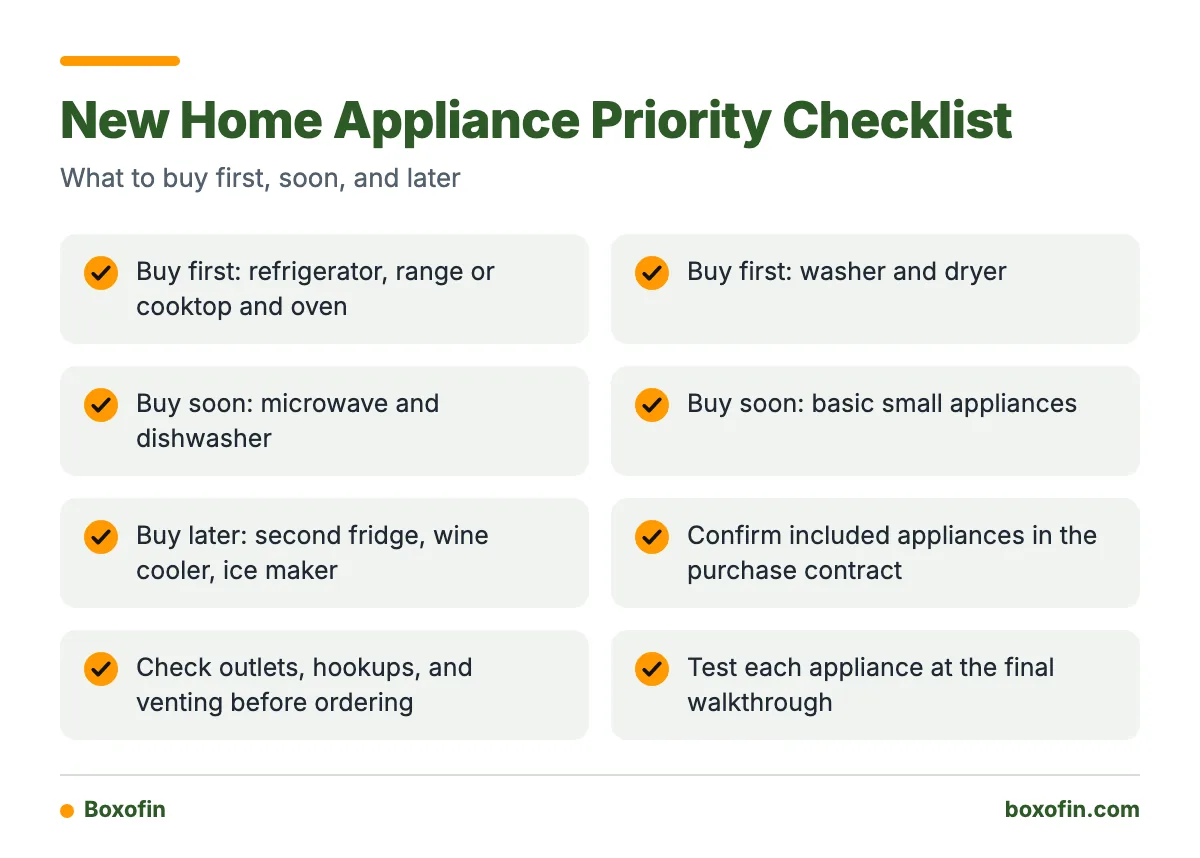
| Priority | Appliances | Why |
|---|---|---|
| Buy first (before move-in) | Refrigerator, range or cooktop and oven, washer, dryer | Daily food and laundry needs |
| Buy soon (first few months) | Microwave, dishwasher, basic small appliances | Convenience, and a chance to watch for sales |
| Buy later (when budget allows) | Second refrigerator, wine cooler, ice maker, upgraded models | Comfort and style, not daily need |
Should you buy new appliances before moving in? Only the ones the house lacks or that do not work. If the existing ones run fine, keep them and put the money toward other move-in costs. Outlets, hookups, and venting should be checked first.
How to Size Appliances for Your Space
Most delivery problems come from skipped measurements. Buying guides, such as the Best Buy Canada appliance buying guide, stress measuring width, height, and depth, plus the path the appliance must travel. Use this checklist:
- Width: Measure the opening at the top, middle, and bottom. Walls are rarely perfectly straight.
- Height: Measure to the underside of cabinets or shelves. For a refrigerator, leave room for the door to open fully.
- Depth: Measure from the wall to the front of the counters. Some refrigerators stick out past the cabinets.
- Doorways and halls: Measure every door, turn, and stair between the truck and the kitchen. Remove doors if needed.
- Clearance: Check the manufacturer’s spec sheet for the space needed at the sides and back, especially for vents and hoses.
- Hookups: Confirm the outlet type, gas line, water valves, and drain are in the right place.
Write down the numbers and compare them with the spec sheet of each model, not just the product name. Household size matters too. A single person can often use a smaller refrigerator and washer, while a family usually needs larger capacity.
Budget Example for a Starter Home
The numbers below are planning ranges only. Real prices change by brand, region, and sale timing.
| Item | Low estimate | High estimate |
|---|---|---|
| Refrigerator | $800 | $1,500 |
| Range | $600 | $1,200 |
| Washer | $500 | $900 |
| Dryer | $500 | $900 |
| Subtotal: buy first | $2,400 | $4,500 |
| Microwave | $100 | $250 |
| Dishwasher | $450 | $800 |
| Total with buy-soon items | $2,950 | $5,550 |
Then add delivery, old-appliance haul-away, and small parts such as a dryer cord, vent hose, or water lines. If the seller leaves some appliances behind, your total drops.
Do Appliance Upgrades Help Resale?
Yes for buyer appeal, less so for appraisal. Fresh, matching appliances can make a kitchen feel move-in ready and may help a home sell faster. But an appraiser values the home by comparing it with similar sales, so new appliances do not guarantee a big bump. Some sources suggest a small marketability gain in the right market, and results vary. You can read more in HomeLight’s look at buying appliances before selling.
For energy efficiency, the refrigerator, washer, and dryer matter most because they run often. Efficient models can lower utility bills, and buyers tend to notice that. If you are selling, replace broken or very dated units first. A working, clean set is usually enough.

Frequently Asked Questions
What appliances do you need for a new home?
At minimum, you need a refrigerator, a cooking appliance, a washer, and a dryer. Many households also add a microwave and dishwasher, plus small kitchen appliances, depending on budget and lifestyle.
What appliances do you need for a house?
The same core four apply to a house: refrigerator, range or cooktop and oven, washer, and dryer. A house may also need a vent hood, a garbage disposal, or a second refrigerator if you have a large household or garage space.
Appliances needed for new home: which should I buy first?
Start with the refrigerator and cooking appliance, since they affect daily meals. Buy laundry machines next. Wait on the dishwasher, microwave, and luxury items if money is tight.
Do new appliances help sell a house?
They often help with buyer appeal and speed of sale, but they do not guarantee a higher appraisal. Spend on repairs or replacements only where old units look worn or do not work.
What appliances come with a house?
Usually the stove, oven, and built-in dishwasher stay. Refrigerators, washers, and dryers vary by sale. Always confirm the list in your purchase contract and check each item at the final walkthrough.