
The best way to reduce dust is to remove it instead of spreading it. Vacuum weekly with a HEPA-filter vacuum, wipe surfaces with a damp microfiber cloth, wash bedding in hot water, and keep indoor humidity at or below 50%. This article shows what to do, how often, and which steps matter most.
- Damp microfiber beats a dry duster, because it traps dust instead of flinging it back into the air.
- Vacuum carpets and furniture every week with a HEPA-filter vacuum.
- Wash bedding weekly in 130 to 140 degree Fahrenheit water to kill dust mites.
- Keep humidity at or below 50% to limit dust mites.
- Shoes off at the door and fewer fabrics cut dust at the source.
Why Dust Builds Up Indoors
Household dust is a mix of things. It includes skin flakes, pet dander, fabric fibers, dirt tracked in on shoes, and dust mite waste. Some comes in through doors, windows, and vents. Much of it is made inside your home by people, pets, and soft items like rugs and sofas.
This matters for one reason. Dust has two jobs to tackle: removal (cleaning what is already there) and prevention (cutting what comes in or gets made). Most advice only covers removal. You need both, or dust returns within days.
Which surfaces and rooms collect the most dust?
Bedrooms and living rooms usually collect the most, because beds, rugs, curtains, and sofas hold fibers and skin flakes. Flat tops catch the fallout: shelves, TV stands, ceiling fan blades, window sills, and the tops of door frames. Floors near entry doors also gather outdoor dirt fast.
The Top 5 Dust-Reduction Actions
If you want the fastest results, start here. These five steps do the most. Everything else is a bonus.
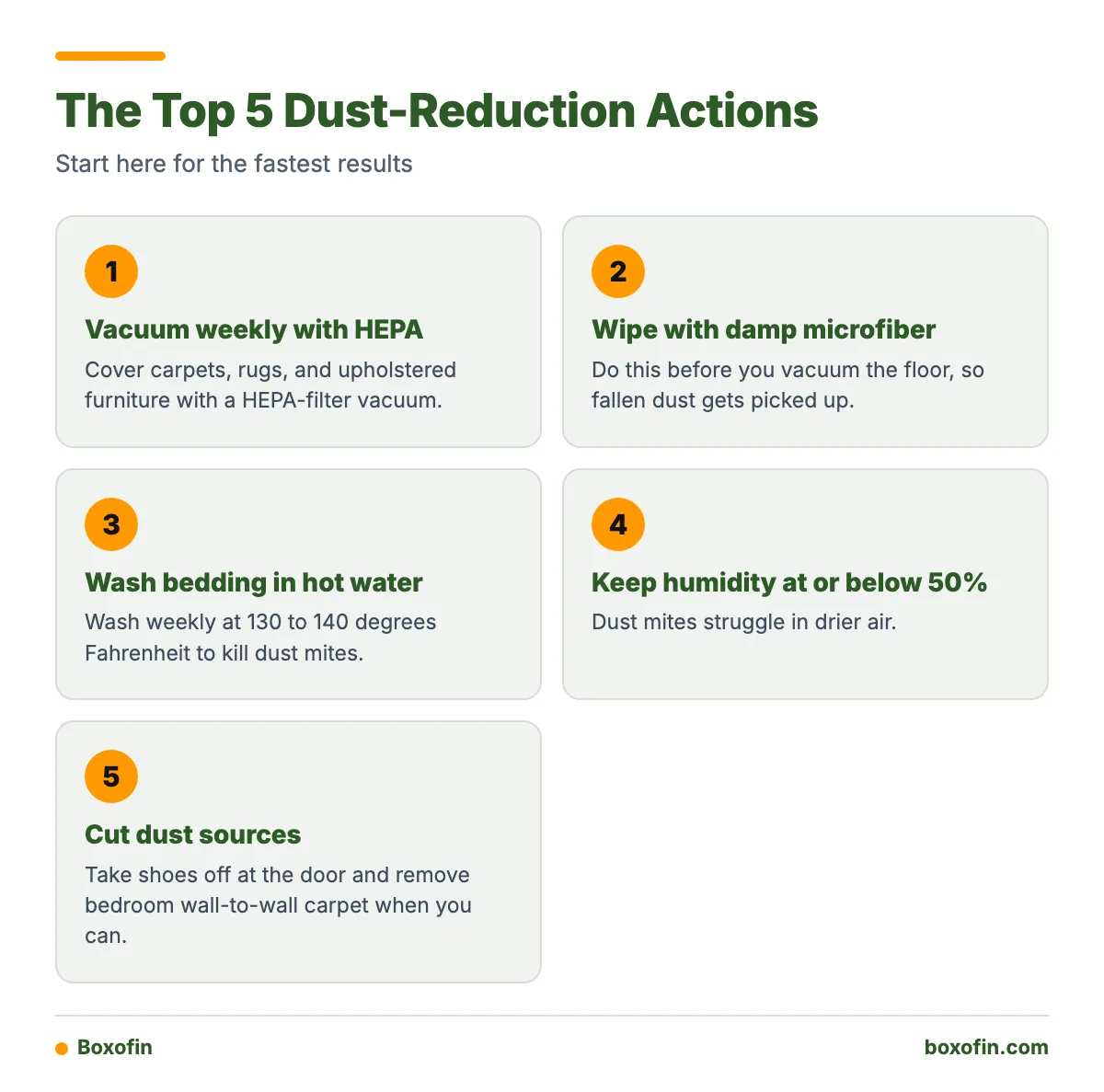
- Vacuum weekly with a HEPA-filter vacuum. Cover carpets, rugs, and upholstered furniture.
- Wipe hard surfaces with a damp microfiber cloth. Do this before you vacuum the floor, so fallen dust gets picked up.
- Wash bedding weekly in hot water. Use 130 to 140 degrees Fahrenheit.
- Keep humidity at or below 50%. Dust mites struggle in drier air.
- Cut dust sources. Take shoes off at the door and remove wall-to-wall carpet from bedrooms when you can.
Secondary tips, like swapping décor, cleaning blinds, or washing curtains, still help. But they will not make a visible difference if the top five are skipped.
Dusting and Vacuuming Without Spreading Dust
Should I use a dry duster or a damp cloth for dusting?
Use a damp microfiber cloth. Dry dusters and feather tools tend to push fine particles into the air, where they settle again on the same surfaces. A slightly damp cloth holds dust on the fibers. Rinse or swap the cloth often so you do not smear dust back on.
How often should I vacuum to control dust?
Vacuum carpets and furniture every week, and more often if you have pets, kids, or heavy foot traffic. Hard floors can be vacuumed and then damp-mopped.
Do HEPA vacuums and HEPA filters really help with dust?
Yes, in one way that counts. A vacuum with a HEPA filter is better at keeping fine dust inside the machine instead of blowing it back out the exhaust. Health agencies recommend one for dust control. A sealed body and clean filter matter too, so empty the bin outdoors or into a bag, and follow the maker’s filter schedule.
Method comparison
| Option | Dust Removal | Main Drawback | Best Use |
|---|---|---|---|
| Dry cloth or feather duster | Low. Moves dust around | Dust goes airborne | Rarely; delicate items only |
| Damp microfiber cloth | High. Traps dust | Needs frequent rinsing | Most hard surfaces |
| Standard vacuum | Moderate | Fine dust may escape exhaust | Low-risk homes |
| HEPA vacuum | High. Holds fine dust | Higher price; filter care | Allergies, pets, carpets |
| Carpet | Holds dust deep in fibers | Dust mite habitat | Only if vacuumed weekly |
| Hard flooring | Easy to wipe clean | Dust shows faster | Bedrooms, high-dust homes |
From the Shop
A common pattern in buyer reviews of vacuums is that people notice less dust only after they switch to a sealed-system or HEPA model and stop using dry dusters at the same time. The two changes work together. Neither is a cure alone.

Bedroom Dust-Mite Mini-Plan
How can I reduce dust mites in bedrooms and bedding?
Dust mites live in bedding, mattresses, pillows, and soft furniture, and they feed on skin flakes. The NIEHS explains how these mites trigger allergy and asthma symptoms. Follow this plan:
- Weekly: Wash sheets, pillowcases, and blankets in 130 to 140 degree Fahrenheit water.
- Once: Put dust-proof covers on the mattress and pillows. Zip them fully.
- Ongoing: Keep bedroom humidity at or below 50%.
- Weekly: Vacuum the mattress surface and floor with a HEPA vacuum.
- Long term: Swap wall-to-wall carpet for bare floors in the bedroom.
Check care labels first. Not every fabric can handle hot water, and some items may need a different method.
Humidity and Ventilation
What humidity level helps keep dust down?
Aim for 50% or lower. Mites thrive in damp, warm air. A small hygrometer costs little and shows your real number. If readings run high, a dehumidifier or air conditioning can help. Run bathroom and kitchen fans while showering or cooking to pull moisture out.
Do not dry the air too far, though. Very dry air can irritate noses and throats. Stay near the 30 to 50% range as a practical target.
Floors, Rugs, and Fabrics
What changes to flooring, rugs, and fabrics reduce dust long term?
Soft items hold dust. Hard items release it to a cloth. Over time, choose:
- Hard flooring over wall-to-wall carpet, especially in bedrooms.
- Small washable rugs instead of large fixed ones.
- Blinds or washable curtains in place of heavy drapes.
- Leather, vinyl, or tightly woven furniture over thick fabric when you replace pieces.
- Fewer open shelves full of knick-knacks. Closed cabinets keep dust off.
You do not need to do this all at once. Replace items as they wear out.

Entryway Habits, Filters, and Vents
Shoes carry soil, pollen, and grit. Set a mat outside and one inside the door, and leave shoes at the entrance. This one habit cuts how much dirt reaches your carpets.
Your HVAC system moves dust through the whole house. Change the furnace or air handler filter on the schedule the maker lists, and check it monthly during heavy use. Wipe vent covers when you dust. Keep furniture and curtains from blocking vents. A stand-alone HEPA air purifier in a bedroom can catch airborne particles too, though it supports cleaning and does not replace it.
- If dust builds up within a day or two: Check filters, vents, and the entry door first.
- If you wake up congested: Start with bedding, mattress covers, and humidity.
- If you have pets: Vacuum more than once a week and wash pet bedding often.
- If humidity is above 50%: Add a dehumidifier before buying more cleaning gear.
A Simple Weekly Schedule
What helps reduce dust in a house the fastest?
A single deep clean shows results right away: dust high to low with damp microfiber, wash the bedding, then vacuum. To keep the results, use this routine.
| When | Task |
|---|---|
| Daily (5 minutes) | Shoes off at the door. Quick damp wipe of the kitchen and entry surfaces. Make the bed. |
| Monday | Wash bedding in hot water. |
| Wednesday | Damp-dust bedrooms, then vacuum. |
| Friday | Damp-dust living areas. Vacuum rugs, carpets, and sofas. |
| Weekend | Damp-mop hard floors. Check humidity. Wipe vent covers. |
| Monthly | Check HVAC filter. Wash curtains or pillows if labels allow. |
If You Have Allergies or Asthma
People with asthma or allergies should leave the room while vacuuming or dusting when possible, since cleaning stirs up particles. If you must do it yourself, wear a mask suited for dust. Follow the guidance from the US EPA on asthma triggers, and talk with your doctor about your own plan.
Frequently Asked Questions
How to reduce dust in your home?
Use a repeat routine. Damp-dust hard surfaces, vacuum weekly with a HEPA vacuum, wash bedding in hot water each week, keep humidity at or below 50%, and keep shoes at the door.
How to decrease dust in my house?
Start with the top five actions. Then cut dust sources: remove bedroom carpet, use washable fabrics, and change HVAC filters on time. Fewer soft items means less dust to clean.
What is the best way to reduce dust in the house?
Remove dust instead of moving it. A damp microfiber cloth and a HEPA-filter vacuum do this best. Pair them with humidity control to limit dust mites.
What helps reduce dust in your home?
Weekly vacuuming, damp dusting, hot-water bedding washes, mattress covers, low humidity, entry mats, and clean filters all help. Together they work far better than any single step.
What helps reduce dust in a house?
Reducing soft surfaces, clutter, and moisture helps most over time. Hard floors, closed storage, and washable textiles give dust fewer places to hide.
How to reduce dust in home?
Follow the weekly schedule above. Clean top to bottom, finish with the vacuum, and keep up the daily five-minute habits. Consistency matters more than long cleaning sessions.