A coffee maker brews automatically by dripping hot water through grounds and a paper filter. A French press is a manual brewer that steeps coarse grounds in hot water before you press them down. The coffee maker wins on speed and volume, while the French press usually gives a fuller, richer cup.
- Coffee makers are hands-off and brew up to 12 cups at once.
- French presses give more body because there is no paper filter.
- Use coarse grounds, water near 200°F, and a 4-minute steep for a French press.
- A 1:15 coffee-to-water ratio is a solid starting point.
- Pick a coffee maker for volume and ease. Pick a French press for control and flavor.
- What Is the Difference Between a Coffee Maker and a French Press?
- Side-by-Side Comparison
- Which One Makes Stronger or Richer Coffee?
- How to Use a French Press Step by Step
- How to Use a Coffee Maker
- Cleanup and Maintenance
- Which Is Better for One Person or a Household?
- Common French Press Mistakes
- Frequently Asked Questions
What Is the Difference Between a Coffee Maker and a French Press?
The difference is the brewing method. A drip coffee maker heats water and sprays it over grounds. The water passes through a paper or metal filter into a carafe. Most machines brew at roughly 195°F to 205°F.
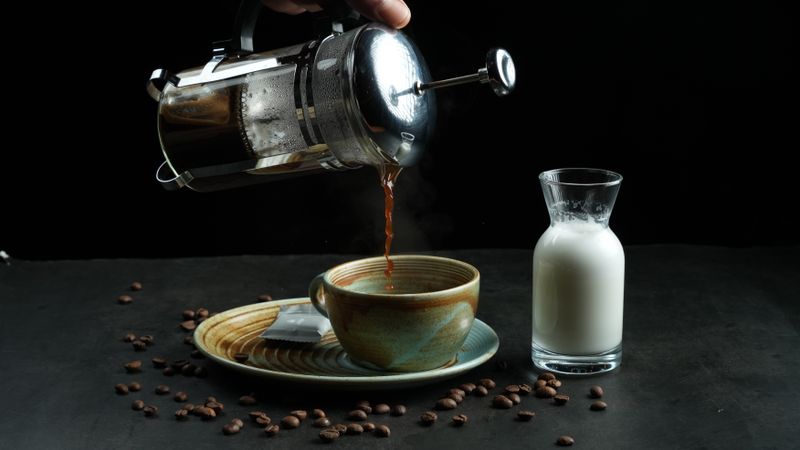
A French press uses immersion. You add coarse grounds and hot water to a glass or steel beaker. The coffee steeps, then you push a metal mesh plunger down to trap the grounds at the bottom. You control every step.
Side-by-Side Comparison
| Feature | Coffee Maker | French Press |
|---|---|---|
| Method | Drip through a filter | Steep, then press |
| Taste | Cleaner, lighter | Fuller, richer, oilier |
| Speed | Set it and walk away | About 5 to 8 minutes, hands-on |
| Cleanup | Toss the filter, rinse basket | Scoop wet grounds, wash parts |
| Batch size | Up to 12 cups on many models | Usually 1 to 8 cups, by press size |
| Best use | Households, busy mornings | One or two people who want flavor |
Which One Makes Stronger or Richer Coffee?
The French press, in most cases. It has no paper filter, so coffee oils and tiny particles stay in your cup. That gives a heavier body and a bolder feel.
Drip coffee is cleaner. The paper filter catches oils and fine bits, so flavors taste lighter and more distinct. Neither is better. It depends on what you like to drink.
How to Use a French Press Step by Step
Many guides stay vague here. These steps give exact numbers, based on common guidance such as the Stumptown French press brew guide and the Food Network French press walkthrough.
What Grind Size Works Best?
Coarse. Think of coarse sea salt. Fine grounds slip through the mesh, make muddy coffee, and turn bitter. They also make the plunger hard to push.
How Much Coffee and Water Should You Use?
Start with a 1:15 ratio of coffee to water by weight. Here is a worked example for a standard mug-and-a-half:
- 30 grams of coffee
- 450 grams of water (about 15 ounces)
- Steep time: 4 minutes
No scale? Use about 2 level tablespoons of coffee per 6 ounces of water. Scoops vary, so adjust to taste.
The Steps
- Heat water to about 200°F. If you have no thermometer, boil it, then wait 30 to 60 seconds.
- Preheat the press with hot water. Pour it out.
- Add the coarse grounds.
- Pour in all the water, wetting every ground. Stir once.
- Set the lid on top with the plunger up. Start a timer for 4 minutes.
- Press the plunger down slowly and evenly.
- Pour right away. Coffee left in the press keeps extracting and turns bitter.
Beginner Checklist
- Coarse grounds, freshly ground if possible
- Water near 200°F
- Press preheated
- 1:15 ratio
- 4-minute timer
- Slow press, then pour at once
How to Use a Coffee Maker
A drip machine needs far less attention. Compared with a French press, you trade control for convenience.
- Place a paper filter in the basket.
- Add medium grounds. About 1 to 2 tablespoons per 6 ounces of water is common.
- Fill the reservoir with cold water to the marked line.
- Press start.
- Pour when the brew cycle ends.
You cannot change water temperature or contact time on most models. That is the main limit. If you want more control, a French press gives it to you.
Cleanup and Maintenance
Drip cleanup is quick: throw out the filter and grounds, then rinse the basket and carafe. Descale the machine every so often to clear mineral buildup from the water lines.
A French press is more work. Wet grounds must go in the trash or compost, not down the drain, where they can clog pipes. Then take the plunger apart and wash the mesh screen so old oils do not turn rancid. Many beakers are dishwasher safe, but check your manual.
From the Shop
A common complaint in buyer reviews is bitter or sour-smelling French press coffee. The cause is often a mesh screen that was rinsed but never taken apart. Oils collect between the layers of the filter.
Which Is Better for One Person or a Household?
- You drink one or two cups and enjoy the process: choose a French press.
- You need 4 to 12 cups, or you are rushed every morning: choose a coffee maker.
- You dislike sediment or oily coffee: choose a coffee maker.
- You want a rich cup with no electric machine: choose a French press.
For a household with mixed needs, some people keep both. The machine handles weekday volume. The press handles slow weekends. For another view, see this coffee maker vs French press comparison.
Common French Press Mistakes
- Grinding too fine. It causes sludge and bitterness.
- Using boiling water. It can scorch the grounds.
- Steeping too long. Past 4 minutes, coffee gets harsh.
- Leaving coffee in the press. It keeps brewing after you plunge.
- Pressing hard and fast. It can stir up sediment or splash hot coffee.
Frequently Asked Questions
How do you use a coffee maker French press?
People often mean the French press itself. Add coarse grounds, pour in water near 200°F, steep for 4 minutes, and press the plunger down slowly. Pour right away. If you mean a drip coffee maker, add a filter, grounds, and water, then press start.
What is the difference in coffee maker vs French press?
A coffee maker drips water through a filter automatically. A French press steeps grounds in water and you press them out by hand. The press gives more body. The machine gives more speed and volume.
What are coffee maker French press instructions for beginners?
Use a 1:15 ratio, such as 30 grams of coffee to 450 grams of water. Preheat the press, stir once, steep for 4 minutes, and press slowly. Total time is about 5 to 8 minutes.
Is the French press how to use method hard to learn?
No. The main skills are grind size, water temperature, and timing. Most people get a good cup in one or two tries. Homes and Gardens also offers a simple French press how-to.
Coffee maker vs French press Reddit: what do people say?
I can’t summarize specific threads. In general, buyers say French press wins on flavor and low cost, while coffee makers win on convenience and large batches. Your routine should decide.