Rinsing the gasket in place is fast, but removing it is the only way to clean the groove underneath. To clean a Ninja blender rubber gasket, unplug the unit, check your manual for removal steps, then wash the seal and groove with warm water, dish soap, and a soft brush. Rinse well, dry fully, and put the seal back in its original position.
Quick answer
Wash the gasket with warm soapy water and a soft toothbrush. For sour smells, soak it briefly in diluted white vinegar, rinse, and air-dry completely. Never use sharp tools or bleach.
- Best for daily cleaning: warm water, dish soap, soft brush
- Best for odors: short diluted vinegar soak
- Best for a damaged seal: replacement
- Check your model’s manual before pulling the gasket out. Not every Ninja seal is meant to be removed.
- Dried dairy and smoothie residue hides in the groove under the seal, even after rinsing or a dishwasher cycle.
- Dilute vinegar, keep the soak short, rinse well, and dry the parts fully.
- Sharp picks, screwdrivers, and knives can puncture or stretch the rubber.
- A stretched, cracked, hardened, or leaking gasket needs replacing.
- Can I remove the rubber gasket from a Ninja blender?
- How do I clean a Ninja blender rubber gasket?
- How do I clean under the Ninja blender gasket?
- How do I clean a Ninja blender rubber gasket with vinegar?
- Can the Ninja blender gasket go in the dishwasher?
- Worked example: a sour-smelling gasket
- How do I reinstall the gasket so the blender does not leak?
- How do I remove a bad smell, mold, or dried food?
- When should I replace a Ninja blender rubber gasket?
- Cleaning checklists
- What do owners say?
- Frequently Asked Questions
Can I remove the rubber gasket from a Ninja blender?
Sometimes. Ninja makes many blade assemblies, and removal rules differ by model. Look in your manual first. If it does not say the seal is removable, do not force it.
Owner reports warn that sharp picks, screwdrivers, or knives can puncture or stretch the rubber. Use your fingertips. A step-by-step removal walkthrough is available in this guide on removing the gasket from a Ninja blender, but your manual still comes first.
Safety first with the blade assembly
- Unplug the base before you touch any blade part.
- Hold the blades by the hub, never by the edges.
- Wash blade parts with a brush, not a bare hand.
Model-safety decision table
| Situation | What to do |
|---|---|
| Manual says the gasket is removable | Remove it gently by hand and clean the groove |
| Manual says do not remove it | Clean in place with a brush and warm soapy water |
| Manual says a part is dishwasher-safe | Follow that part’s rule, then still check under the seal |
| Manual is missing or unclear | Look up your model number or contact Ninja before removing anything |

How do I clean a Ninja blender rubber gasket?
Use warm water, a few drops of dish soap, and a soft toothbrush. This handles most everyday buildup.
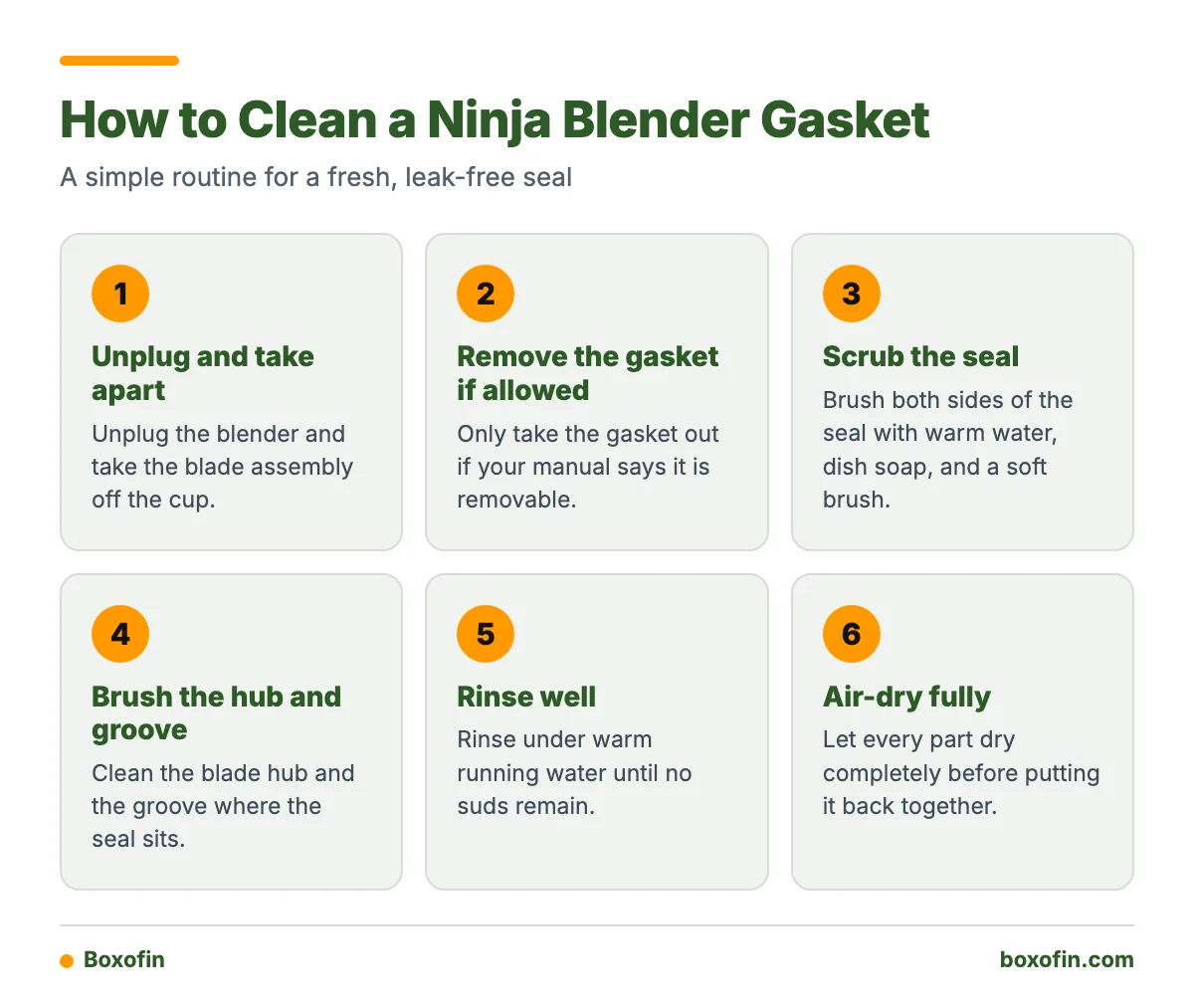
- Unplug the blender and take the blade assembly off the cup.
- Remove the gasket only if your manual allows it.
- Scrub the seal on both sides with the soft brush and soapy water.
- Brush the blade hub and the groove too.
- Rinse under warm running water until no suds remain.
- Air-dry everything fully before putting it back together.
Owners commonly report using a soft toothbrush or small brush to reach residue around the seal and blade assembly. A straw-cleaning brush also works well in tight spots.
How do I clean under the Ninja blender gasket?
Lift the seal out, then brush the groove it sits in. This narrow channel traps dried dairy and smoothie residue that normal rinsing misses. Reports from owners and cleaning guides note that food can remain beneath a gasket even after rinsing or a dishwasher cycle.
Run the brush slowly around the full groove. Wipe it with a damp cloth. If you see film or flecks, repeat with soapy water. Look at the underside of the seal too.
How do I clean a Ninja blender rubber gasket with vinegar?
Soak the removed gasket in warm water mixed with white vinegar, then rinse and dry it. Vinegar helps with odor and light residue. This is general cleaning advice, not a universal Ninja approval, so check your manual.
How long should I soak the gasket in vinegar?
One practical Ninja method uses warm water and white vinegar for about 15 minutes, followed by rinsing and drying. Another cleaning guide suggests an equal-parts water and vinegar soak for about 30 minutes. I suggest starting with the shorter soak and a diluted mix. Do not leave rubber in vinegar for hours.
Which cleaner should you use?
| Cleaner | Best use | Label |
|---|---|---|
| Warm soapy water | Everyday cleaning | Recommended |
| Diluted white vinegar | Odor and light residue, short soak | Recommended, with care |
| Baking soda paste | Gentle scrub on stubborn spots | Use lightly, rinse well |
| Bleach | None | Avoid |
Bleach and harsh chemicals can harm rubber and leave residue where food touches. Skip them.
Can the Ninja blender gasket go in the dishwasher?
Only if your manual says that exact part is dishwasher-safe. Even then, a dishwasher may not clear the groove, and a heated-dry cycle may be hard on a rubber seal. Small seals can also drop into the bottom of the machine.
The safest habit is hand washing the blade assembly and gasket. Treat the dishwasher as a convenience, not a deep clean.

Worked example: a sour-smelling gasket
Say you blend a protein shake daily and the blade assembly smells sour. Here is a sensible routine, based on the methods above.
- Remove: Unplug the unit. If the manual allows it, lift the gasket out by hand.
- Brush: Scrub the seal and groove with soapy water and a soft toothbrush.
- Soak: Put the gasket in warm water with a splash of white vinegar for about 15 minutes.
- Rinse: Rinse under running water until the vinegar smell fades.
- Dry: Air-dry the seal and the groove completely.
- Leak test: Reinstall the seal, add water to the cup, and check for drips before real use.
How do I reinstall the gasket so the blender does not leak?
Press it back into its original groove, evenly, with no twists or gaps. A loose or incorrectly seated gasket can contribute to leaks, so check that it sits flat all the way around.
- Make sure the seal and groove are fully dry.
- Seat one section first, then work around the ring.
- Do not over-stretch the rubber to fit it.
- Run a water-only test before blending anything.
How do I remove a bad smell, mold, or dried food?
How do I remove a bad smell from a Ninja blender gasket?
Clean the groove, then do a short diluted vinegar soak. Dry everything fully, because trapped moisture brings smells back.
How do I clean mold or dried food from the gasket groove?
Soak the part in warm soapy water to soften the residue. Then brush it out with a soft toothbrush. Do not scrape with metal. If dark spots stay on the rubber after cleaning, replace the seal.
When should I replace a Ninja blender rubber gasket?
Replace it when it is stretched, cracked, hardened, torn, or still leaking after a clean, dry reinstall. A worn seal cannot hold liquid in, and no amount of scrubbing fixes that. Order a part made for your exact model.
Cleaning checklists
Five-minute post-use checklist
- Rinse the blade assembly right away.
- Wash with warm soapy water and a brush.
- Check the seal edge for trapped food.
- Air-dry parts apart.
Weekly deep clean for dairy and protein shakes
- Remove the gasket if your manual allows it.
- Brush the groove and underside of the seal.
- Do a short diluted vinegar soak if there is any smell.
- Rinse, dry fully, reinstall, and inspect for cracks.
Some owners report removing the gasket weekly when blending daily protein shakes to prevent sour smells.
What do owners say?
Owners like
- Quick cleaning is manageable when the blade assembly is rinsed immediately after use.
- A small toothbrush or straw-cleaning brush helps reach residue around the seal.
- Regular gasket removal and cleaning can prevent odors and leaks.
- Some owners report years of leak-free use when the gasket is maintained carefully.
Common complaints
- Food and dairy residue can remain trapped under the gasket despite rinsing or dishwasher cleaning.
- The gasket can be difficult to remove without stretching or puncturing it.
- Sour smells and mold-like buildup show up around poorly cleaned seals.
- Some users get leaks after gasket damage, aging, or incorrect reinstallation.
- The seal design is often described as difficult to clean thoroughly.
Summarised from owner reviews and long-term user reports; individual experiences vary.
Frequently Asked Questions
How to clean ninja blender rubber gasket?
Unplug the blender and check your manual. Remove the gasket only if allowed. Scrub it and the groove with warm water, dish soap, and a soft toothbrush. Rinse, dry completely, and reinstall it in its original position.
How to clean ninja blender rubber gasket with vinegar?
Soak the removed gasket in warm water mixed with white vinegar for about 15 minutes. Some guides use equal parts for up to 30 minutes, but that is general advice, not a Ninja rule. Rinse well and air-dry fully before reassembling.
How to clean ninja blender rubber gasket reddit?
Reddit threads often mention a toothbrush, weekly removal, and vinegar soaks. They also report sour smells, mold-like buildup, and leaks. These are owner experiences, not manufacturer-approved care, so confirm steps in your manual before you remove or soak anything.